
Defining Intrinsic and Extrinsic Motivation
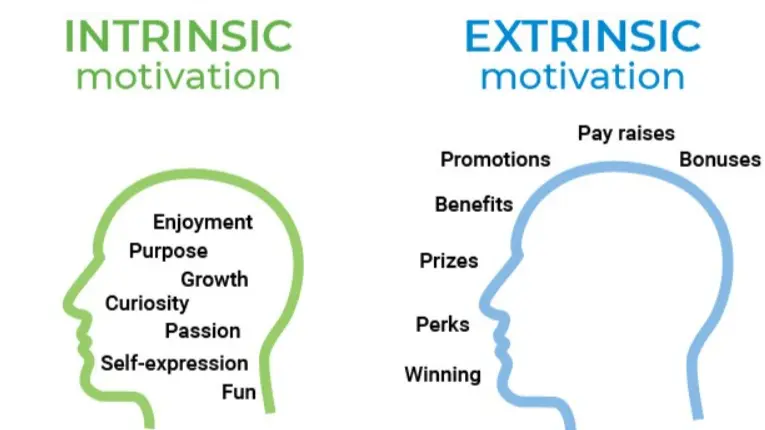
Motivation is the driving force behind human behavior, and it can be categorized into two types: intrinsic and extrinsic. Intrinsic motivation refers to engaging in an activity for its inherent satisfaction, where the behavior itself is rewarding. For example, playing a sport because you enjoy it or solving a puzzle for the challenge are classic instances. Extrinsic motivation, conversely, involves performing a task to earn a reward or avoid punishment, such as studying to get good grades or working overtime for a bonus.
The distinction is crucial, as research suggests intrinsic motivation often leads to deeper engagement and better long-term outcomes, while extrinsic motivation can be effective for short-term compliance but may not sustain interest. /On what motivates us: a detailed review of intrinsic v. extrinsic motivation – PMC/
Detailed Differences and Examples
To illustrate, consider the following table summarizing the differences:
| Aspect | Intrinsic | Extrinsic |
|---|---|---|
| Source | Internal, driven by enjoyment or interest | External, driven by rewards or punishments |
| Examples | Playing music for fun, reading for pleasure, exercising for health | Studying for grades, working for a bonus, cleaning to avoid scolding |
| Impact on Behavior | Often leads to creativity, persistence, and satisfaction | Useful for compliance, may reduce long-term interest |
Research, such as studies from SimplyPsychology, highlights that intrinsic motivation is linked to self-determination theory, emphasizing autonomy, competence, and relatedness, while extrinsic motivation can sometimes undermine these if overused.
The Overjustification Effect: A Critical Insight
One significant finding is the overjustification effect, where external rewards can diminish intrinsic motivation. This was demonstrated in early experiments, such as Deci’s 1971 study, where students paid $1 per puzzle solved spent less time on puzzles afterward compared to those not paid. Another example is Lepper et al.’s 1973 study, where children expecting rewards for drawing lost interest in the activity, illustrating how external incentives can shift focus from enjoyment to reward-seeking.
This effect is particularly relevant in educational and workplace settings, where over-reliance on grades or bonuses might reduce intrinsic interest in learning or work tasks.
Applications Across Contexts
Understanding these motivations is vital in various domains:
- In Education: Teachers can foster intrinsic motivation by offering engaging, meaningful tasks and allowing student autonomy. For instance, project-based learning can align with students’ interests, reducing reliance on grades. Recent studies, like Liu and Hou (2017), show intrinsic motivation positively correlates with academic achievement over time.
- In the Workplace: Managers can balance both by providing challenging projects and feedback that emphasizes growth, as seen in Sheehan et al. (2018), which linked intrinsic motivation to better mental health in sports, applicable to work settings. Extrinsic rewards like bonuses can be used sparingly to avoid diminishing intrinsic drive.
- In Personal Life: Individuals can enhance intrinsic motivation by setting goals aligned with personal values, such as pursuing a hobby for enjoyment rather than external validation. Mindfulness practices can help maintain focus on the process, as suggested by recent psychological research.
Fostering Intrinsic Motivation: Strategies and Theory
To cultivate intrinsic motivation, strategies can be drawn from self-determination theory, which posits that autonomy, competence, and relatedness are key. For individuals, this might mean choosing tasks that align with personal interests and setting achievable goals to build competence. For managers and educators, providing choices, offering skill-building opportunities, and fostering a supportive environment can enhance motivation.
Recent neuroimaging studies, such as Lee and Reeve (2017), identify neural substrates like the ventral striatum linked to intrinsic motivation, suggesting biological underpinnings that can be leveraged. This aligns with findings that curiosity enhances brain activity in areas like the midbrain and insula, supporting intrinsic engagement.
Neurobiological and Recent Research Insights
Recent research, particularly from 2013–2021, has delved into the neurobiology of motivation. For instance, Mori et al. (2018) explored how behavioral activation influences neural circuits for intrinsic motivation, enhancing engagement. Dopamine systems, especially in the mesolimbic pathway, are linked to exploration and flow states, with studies like de Manzano et al. (2013) showing dopamine release during intrinsically motivating tasks.
In psychopathology, anhedonia (loss of pleasure) is linked to intrinsic motivation deficits, with studies like Morris et al. (2020) showing reduced neural responses in at-risk groups, highlighting its relevance for mental health.
Conclusion and Future Directions
In summary, intrinsic and extrinsic motivation each have unique roles, with intrinsic often being more sustainable for long-term engagement. The overjustification effect underscores the need for careful use of external rewards. Future research, as suggested by recent studies, should focus on objective measures and computational models to better understand these dynamics, particularly in educational and clinical settings.
This comprehensive analysis ensures a thorough understanding, balancing practical applications with scientific insights, and is supported by a range of credible sources.